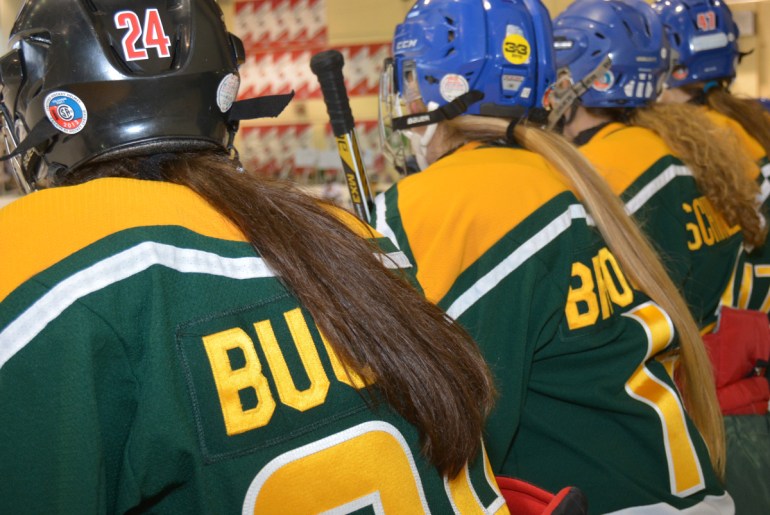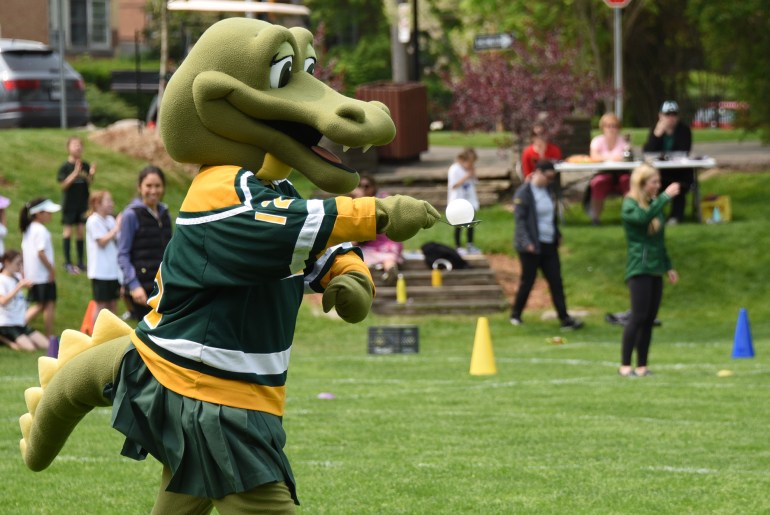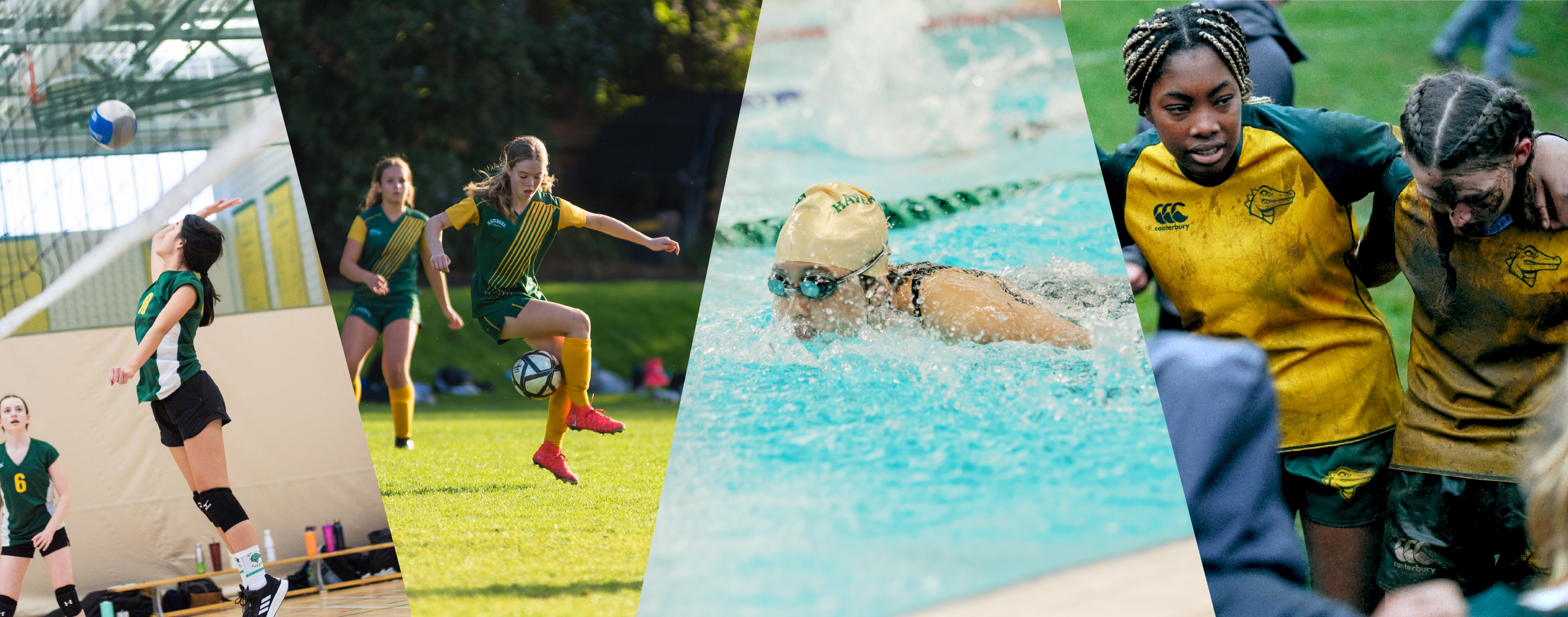

To us, success means trying a new sport or picking up a passion and then carrying it with you through life.
Fostering Academic Success Through Physical Engagement
Anyone who has ever played on a sports team or engaged in personal fitness and recreation knows firsthand the benefits of physical activity and team play. Pushing your body to perform and reaping the rewards is gratifying. They also do wonders for self-confidence.
As a school that attracts high-achieving individuals, we have always been committed to helping our students understand the importance of balance and have promoted the pursuit of a well-rounded experience. As we all know, however, balance is highly dependent on individual circumstances and access to opportunity, facilities and support.
The key to success in achieving balance is consistency. Sometimes our students will be more focused on academics, while at other times they’ll be training for a sports team or rehearsing for a performance. What’s important is to ensure they’re never fully out of balance.
To help students understand the value of physical activity, we’ve been leveraging research and science to illustrate how movement impacts both mental wellbeing and performance. Havergal students are critical thinkers, seeking research and facts and thus our wellbeing approach works to motivate our students to prioritize physical activity based on proven outcomes: when we understand how movement and activity benefit our health and increase our performance across all areas of life, we are more motivated to get up and get moving.
Beyond winning a championship or playing on a varsity team, we want our girls to experience the joy that can come from sport. We never want a student to say: ‘I’m not a varsity athlete, so I’m not going to bother playing any sports.” At Havergal, sport is for everyone and athletics is not an all-or-nothing game. For women, this experience is especially important, as sport and athletic pursuits were spaces traditionally reserved for men.
Over the past 30 years, women’s health and fitness have too often focused on the outcome of achieving a particular body type, shape or persona. We know that women can be pushed to exercise in order to look a particular way, and these often unattainable goals can be extremely detrimental. At Havergal, sport has been and will continue to be about teamwork, drive, collaboration, grit and strength.
Our goal is to ensure our students buck the national trends when it comes to engagement in organized sport for girls. In Canada and the United States, we see engagement in girls’ sports decline at twice the rate of boys’ when students hit adolescence. This is attributed to several factors, including unequal access, the professionalization of youth sports and the social expectations placed on girls.
This is not the case at Havergal and, in fact, post-pandemic we are seeing a record number of Havergal girls wanting to play on school teams and learn a new sport via our instructional program. We do everything we can to model the value of being active, trying new things, getting dirty and playing for fun, as well as playing to win.
We are fortunate to have expansive facilities and to offer a wide range of programming—and we are actively looking at our facilities, spaces and programming to ensure that every girl who wants to engage in sport and athletics at Havergal can do so. We have experienced, dedicated coaches who guide our students in their athletic journeys, whether that is coaching girls to a Conference of Independent Schools Athletics Association (CISAA) Championship or giving expert instruction when trying a sport for the very first time.
Outside of the benefits of learning critical skills such as physical literacy, teamwork and collaboration, discipline, time management, resilience and perseverance, athletics and sport also contribute to academic success. Athletics have also been proven to bolster learning by allowing students to develop and embody a growth mindset. Think back to the first time you swam or learned to ride a bike. You likely didn’t expect perfection right away. The idea of, “I can’t do this yet” is what a growth mindset is all about. The more practical examples we can give students of working at something in order to achieve success, the better prepared they’ll be to tackle difficult academic challenges.
That’s why our investment in sports programming isn’t reserved exclusively for competitive athletes. To us, success means trying a new sport or picking up a passion and then carrying it with you through life. We want our students to build healthy habits during their time at Havergal, whether it’s golf, flag football, swimming or tennis.
In this issue of Torch magazine, we dive into the benefits of physical health on academic success, mental clarity and overall student wellbeing in our Feature Story. We explore the Athletic Program at Havergal and how being physically active can support academic achievements in our Message from the Administration. We reconnect with Emma Buckles, Class of 2017, in our Alums/Old Girls Profile as she begins her journey on Ottawa’s Professional Women’s Hockey League team and what it took to make it there. And in our School Captain Profile, we learn more about Fiona Shen and her experiences trying out sports as a new resident of Canada. These opportunities helped to shape her into the confident and ambitious leader she is today.
No matter how seriously someone takes a sport, participation is filled with opportunities to lead, develop collaboration skills and practise failure. While practising failure may sound strange, we believe it provides an invaluable experience. Failure can be a tough pill to swallow for our highly driven students, and athletics provides an opportunity to do so gracefully. Both team sports and individual sports teach students to accept defeat, learn from their challenges and develop the grit to come back and try again. And the best part is, they get to have fun while doing it.
Sincerely,
Katrina
Published April 2024
2023–24 Issue